Case study
Dracania Archives
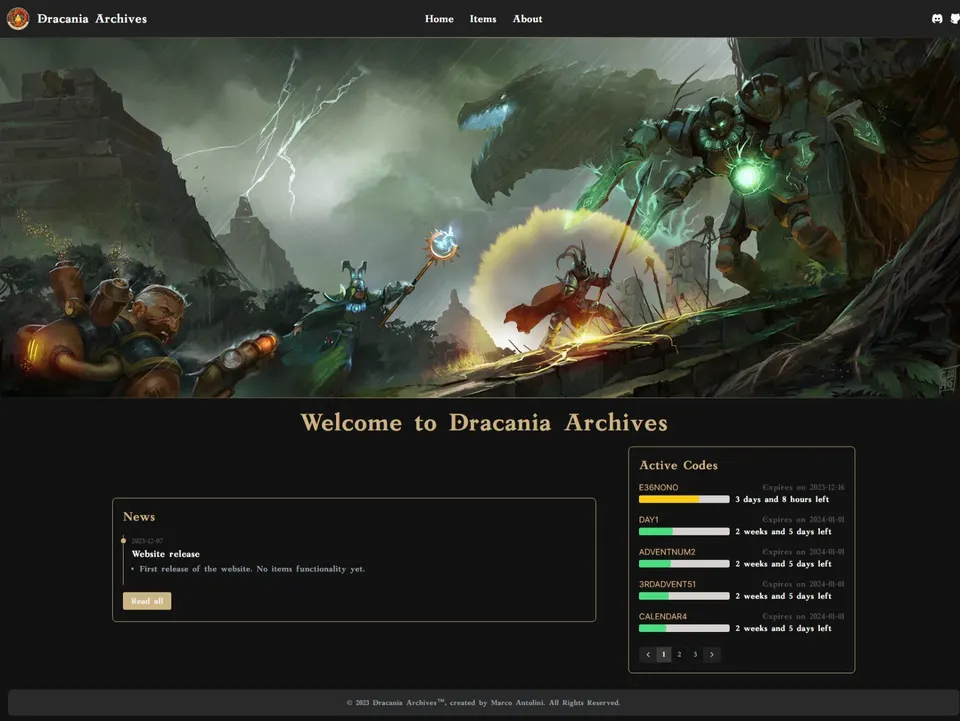
Dracania Archives was a community web app for Drakensang Online that helped players search items, explore builds, and access useful game information in one place. It was designed around the way active players plan, compare, and improve their characters.
- Next.js
- TypeScript
- Convex
- Vercel
- Stripe
Status
Archived project
Ownership
Solo, end to end
Audience
Drakensang Online community
Problem
Drakensang Online players needed a fast, searchable item database and tooling beyond scattered wikis and spreadsheets. Community knowledge was hard to browse on mobile and slow to update.
Solution
Dracania Archives brought item data, search, filtering, and player-focused browsing into one dedicated web app, tuned around how the community compared gear and builds while the project was active.
My role
Solo builder across product direction, frontend architecture, data modeling, deployment, and iterative UX based on player feedback.
Stack
8 tools
- Next.js
- React
- TypeScript
- Tailwind CSS
- Shadcn/ui
- Vercel
- Convex
- Stripe
Architecture
A web app backed by a structured game dataset, with the frontend shaped around quick lookup flows and filter-heavy browsing instead of long wiki-style pages.
- Typed item records modeled for search, filtering, and comparison
- Frontend routes organized around browsing intent rather than raw data categories
- Hosted on Vercel with Convex handling persisted data
- Stripe integration prepared for premium/community-support flows
Challenges
- Large, evolving game dataset with search and filter expectations
- Balancing feature depth with fast loads on mid-tier devices
- Shipping while studying, with tight feedback loops from real users
Outcomes
- Previously live at dracania-archives.com and used by active Drakensang Online players
- Demonstrates end-to-end ownership: design, build, deploy, maintain
- Validated search, filtering, and mobile browsing needs through feedback from real players
Next case study
CssHub
Chrome extension that syncs CSSBattle submissions to your GitHub repo, no copy-paste, every pass becomes a commit.